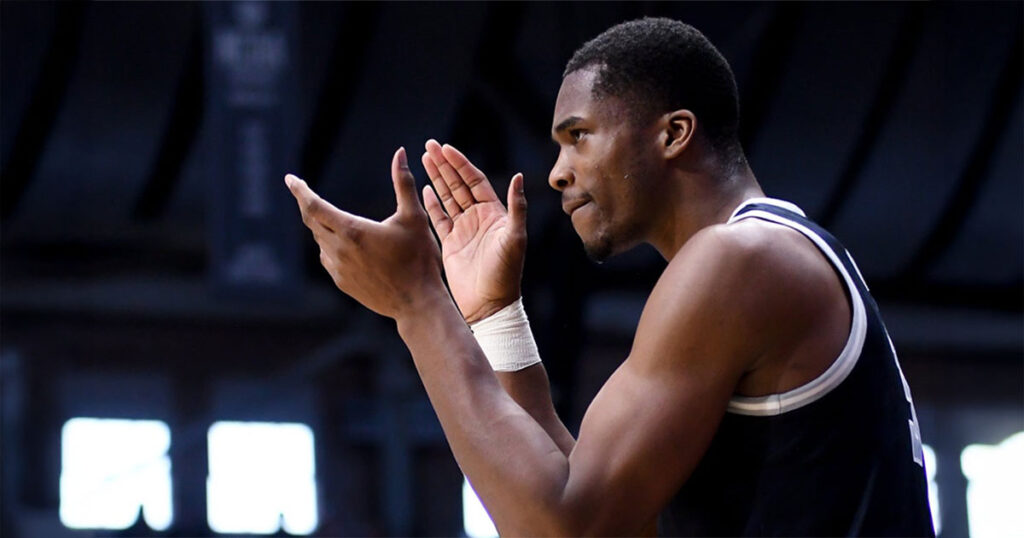
My name is Vince Iwuchukwu. I am a college basketball player. I am also someone who has experienced, firsthand, how quickly a life can change and how easily a person’s story can be reduced to a technicality once it enters a formal process.
I was eighteen years old in my first college basketball practice when my heart stopped on the court. I collapsed, and I died. I am alive today only because trainers, medical staff, and others around me acted immediately. I will always be grateful for that response, and I will never forget what they did for me and my family.
After that moment, I was not expected to play basketball again. That was not speculation. It was the reality in front of us. My family and I were forced to confront the possibility that the sport I had worked for my entire life was over, and that the larger question was whether I would be able to live normally and safely at all.
Over time, I worked my way back. I did not return recklessly, and I did not disregard medical guidance. I returned under strict medical restrictions and significant oversight. My participation required careful planning, consistent monitoring, and a level of caution that most athletes never have to consider. To this day, I play with an implanted defibrillator in my chest. I live with that device, the responsibility it represents, and the reality of what happened every single day.
I want to state this plainly: I did everything right. I followed medical guidance. I complied with restrictions. I followed protocols. I respected the process.
The reality of returning after a medical crisis
When people hear that an athlete “came back,” they often assume it means everything returned to normal. That was not my experience. Returning after a cardiac arrest is not simply a matter of being cleared and moving on. It is ongoing caution. It is living with an implanted device. It is continuing to compete under restrictions and heightened supervision. It is carrying the emotional and psychological weight of knowing that what happened once can happen again.
It is also understanding that your eligibility clock does not pause simply because your health and safety demanded a different path.
What I requested from the NCAA
I asked the NCAA for one additional year of athletic eligibility. I have been denied twice.
No one has claimed that my medical situation was not real. No one has disputed the facts. My documentation has been reviewed and accepted as legitimate. Despite that, I was denied largely over a game count, a number on paper.
That is what my future has been reduced to: a statistic, treated as determinative, even though the circumstances of my participation were defined by a life-threatening medical emergency, a medically restricted return, and the long-term consequences that followed.
A rule intended for circumstances like mine
The NCAA has rules that exist specifically to address significant hardship, including medical hardship. Those rules exist because the NCAA recognizes that life and health can interrupt an athlete’s season and career in ways that cannot be captured accurately by a box score.
In my case, that rule was not applied.
Part of what has been most difficult is realizing how unclear and difficult the process can be to navigate. I’ve relied on the guidance of my schools compliance for most of the process, but even with that the advice my family kept receiving was to hire a lawyer. We came in thinking the process was fair and equitable but the failure has left me fighting not only for an outcome, but for an honest review of the facts and a fair application of the NCAA’s own policies.
I am not seeking a loophole
I understand why eligibility rules exist. I understand that the NCAA must be cautious about abuse of the process. I also understand that, from the outside, requests for additional eligibility can be viewed skeptically.
However, that is not what this is.
I am not asking anyone to bend rules, ignore standards, or create a special exception on my behalf. I am asking the NCAA to apply the rule it already has, fairly and consistently, to the circumstances it was designed to address.
My case involves a documented medical emergency in which my heart stopped and I died. It involves an implanted defibrillator that I live with every day. It involves a medically restricted return that required monitoring, limitation, and caution. I complied with every requirement placed in front of me. I respected the process. I did what I was told to do.
It is painful to be treated as though I am seeking an advantage when I am asking only for fairness and for the stated purpose of the NCAA’s hardship protections to be reflected in how my case is handled.
What this process has felt like
The most difficult part is not only the denial itself. It is the sense that my case was never fully considered on its merits. It has felt, at times, as though I was processed rather than heard, and closed out rather than understood.
If a system asserts that athlete well-being matters, then it must demonstrate that commitment when it is tested most directly. If a medical hardship rule exists, then it should be applied with the seriousness and humanity that the rule is intended to represent.
I am not asking to be viewed as special. I am asking to be viewed as human.
Why I am speaking publicly
I have already spoken publicly, including in advocacy settings, because I do not want my experience to be dismissed as an isolated misfortune or a misunderstanding that is too inconvenient to correct. I do not believe the system improves when athletes are quietly expected to accept outcomes that are inconsistent with the principles the system claims to uphold.
There is a broader conversation taking place in college sports about fairness, athlete rights, and accountability. I am not speaking in theory. I am living the consequences of a process that can acknowledge the facts of a medical emergency, accept the documentation, and still deny relief based primarily on a number.
What I am asking for
I am asking for attention, for accountability, and for a fair review that applies the NCAA’s own rules as intended. I am asking the NCAA to evaluate my circumstances as the hardship they plainly are, rather than as a technical dispute where a statistic outweighs reality.
If anyone takes the time to read my case carefully and evaluate it honestly, I believe it will be clear that I am not asking for an exception. I am asking for existing protections to be applied as written, and as promised.
Thank you for taking the time to read my story. Retelling this is not easy, but I am speaking up because I do not believe this should be over, and I do not believe this should happen to anybody else.